
Meet Our Accountability Circle...

Clarence Cachagee
Founder
Clarence is from Waterloo Region and has an undeniable spirit for change. With a primary focus on working with the Spirit within, he is a helper, visionary and author who is known for investing his whole self into his community. Clarence originates from Chapleau Cree First Nation and calls Cambridge his home. He has faced his fair share of struggles and chooses to serve and support those living on the margins of society.
Clarence continues to engage with his community through land-based teaching and healing as an Indigenous Community Educator, public speaking and facilitating groups to encourage healing. Clarence says, “It is said that Mother Earth has all the medicines for every disease there is. Indigenous peoples of Turtle Island are land-based people. They have received teachings from the animals. Their creation stories are about Mother Earth, and it’s said that you can go anywhere on Turtle Island and find the medicine you need. Understanding land-based philosophies help us become better connected and feed our spirits”.
Clarence is the first full-time staff person and the visionary behind Crow Shield Lodge which is a place for reconciliation, land-based teaching and healing.

Nicole Robinson
Nicole identifies as having mixed Haudenosaunee and European ancestry. She is a member of the Oneida Nation of the Thames in Southern Ontario and lived most of her life in Ontario’s ‘Near North’. Nicole moved to the Waterloo Region in 2006 to pursue graduate studies and has worked at the Waterloo Region District School Board as the Equity and Inclusion Officer – Indigenous Focus since 2008. Nicole’s passion for raising Indigenous awareness in classrooms is what drives her work in this role. Much care is given to building bridges between WRDSB staff/students and the Indigenous communities within the region in order to create classrooms that can become agents of change that we hope to see as we move forward toward reconciliation.

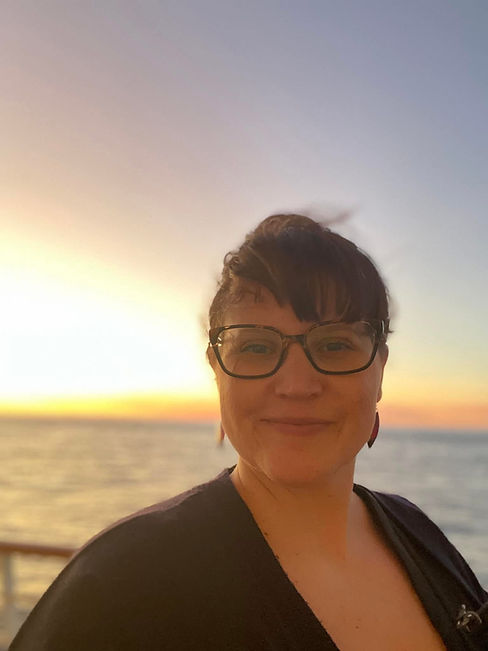
Katrina Graham
Katrina is Mahiikan Dodem (Wolf Clan) and a proud member of Moose Cree Frist Nation with Cree, Scottish and Irish roots.
Katrina grew up in the Kitchener-Waterloo area and now resides in the Centre Wellington area. Katrina graduated from the McMaster University BScN program in 2012 and focuses her nursing career on palliative care and Indigenous health and wellness. Katrina has experience as a case manager, home visiting nurse, hospice nurse, clinical resource nurse, Indigenous Patient Navigator and now the Director of Care at Hospice Wellington.
Indigenous cultural and spiritual practices have been integrated into her practice by incorporating traditional healing modalities, advocating for indigenous health and wellness and supporting and connecting community members to local traditional healers and elders.
Katrina has studied energy therapies such as Reiki, Crystal Reiki, Healing Touch and Holistic Life Coaching.
She is actively involved in her community and has served on many health and advisory groups in the Waterloo-Wellington region. Katrina is currently working with the Guelph-Wellington Ontario Health Team, Truth and Reconciliation Working group, Waterloo Wellington Indigenous Relations Working Group, and the Quality and Risk Committee with Hospice Wellington. Katrina dedicates her time to ensuring that Indigenous communities have access to and receive quality, equitable health and social care.
Her passions include spending time with her family at the trailer, travelling, drumming and being on the land.
Katrina is honoured to be a part of the CSL Accountability Circle to help support this amazing organization and community.
Dave Skene
Dave Skene is Métis and a citizen of the Métis Nation of Ontario. Dave is currently involved with Wisahkotewinowak. An urban Indigenous garden collective in the Waterloo-Wellington region. Dave has worked as a grass-roots education innovator for over 30 years and has led numerous teams of Canadian youth on international volunteer and education projects. He has taught justice and community development from an Indigenous perspective across Canada and Internationally. Dave’s current focus is on issues of Urban Indigenous food and land sovereignty, Indigenous agricultural practices, and land-based education.
